Converse Cowboy
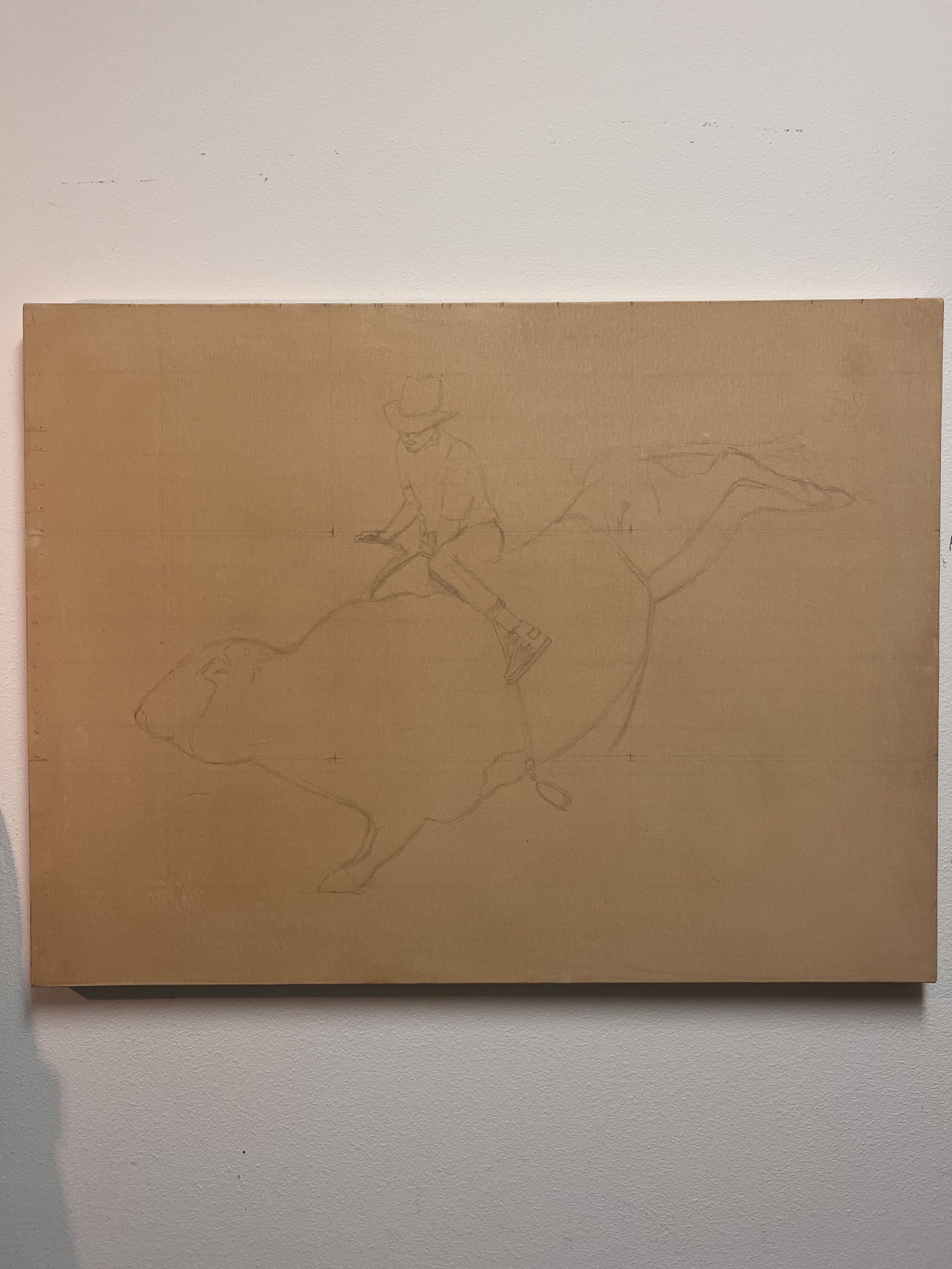
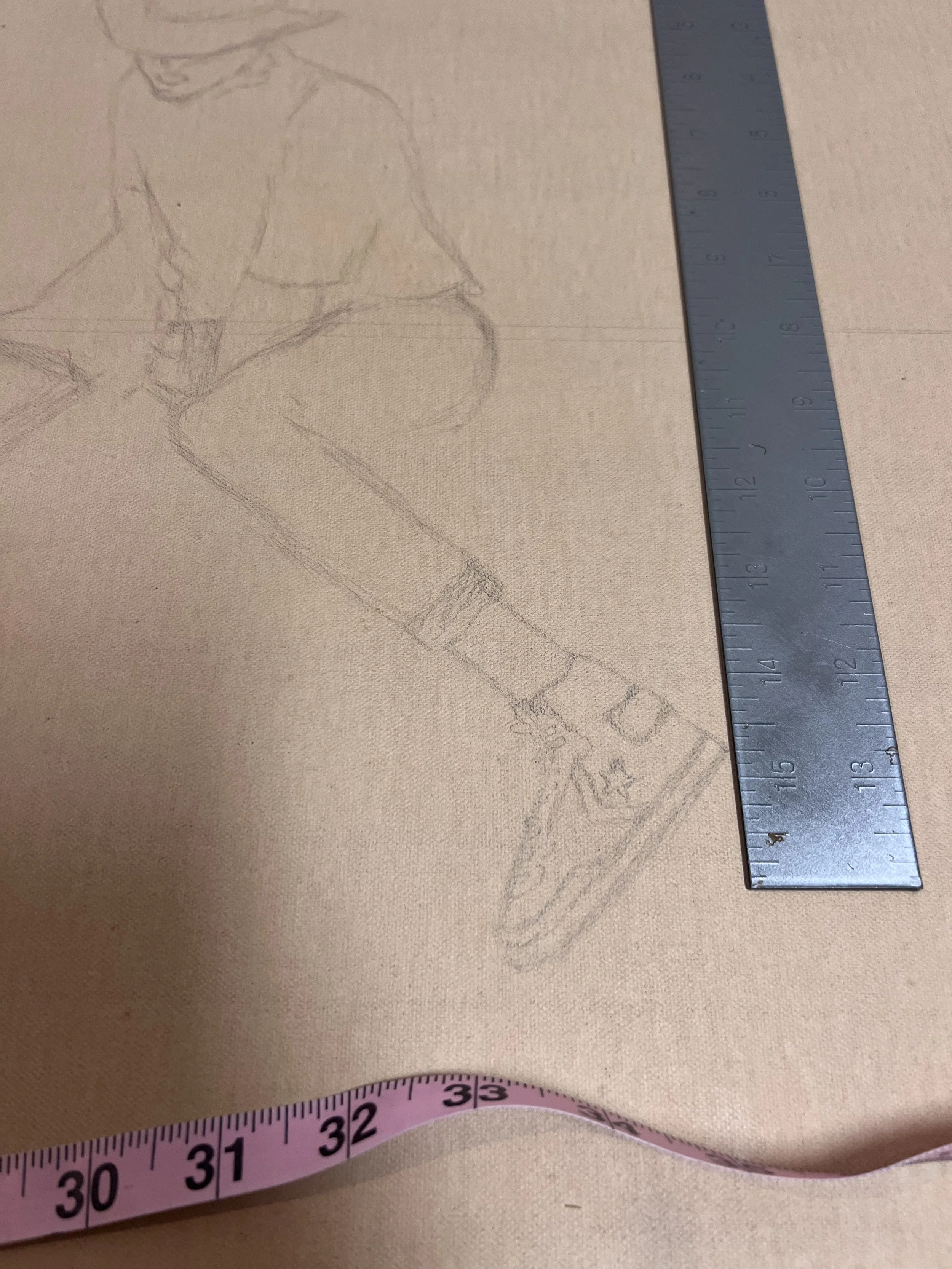
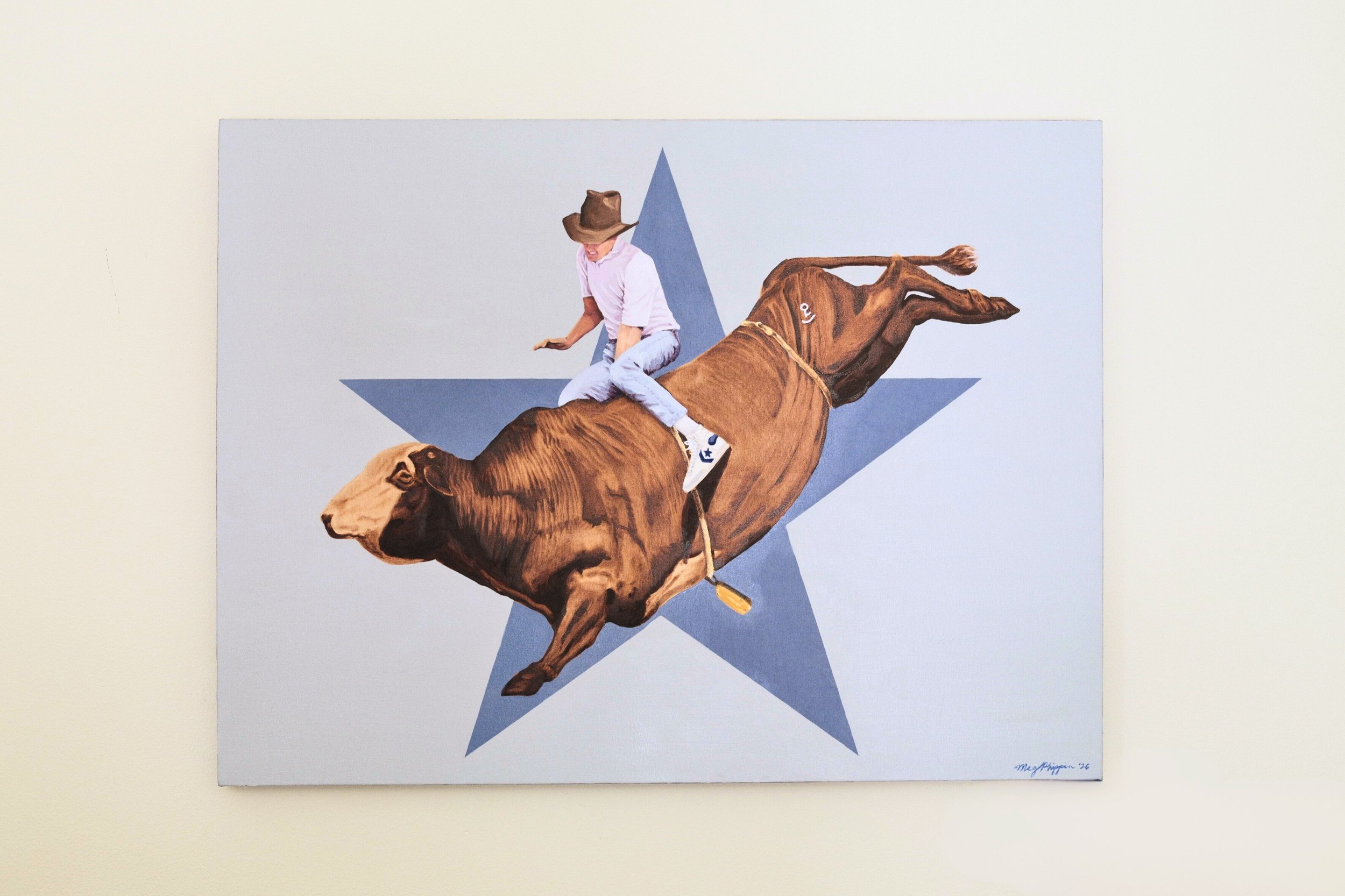
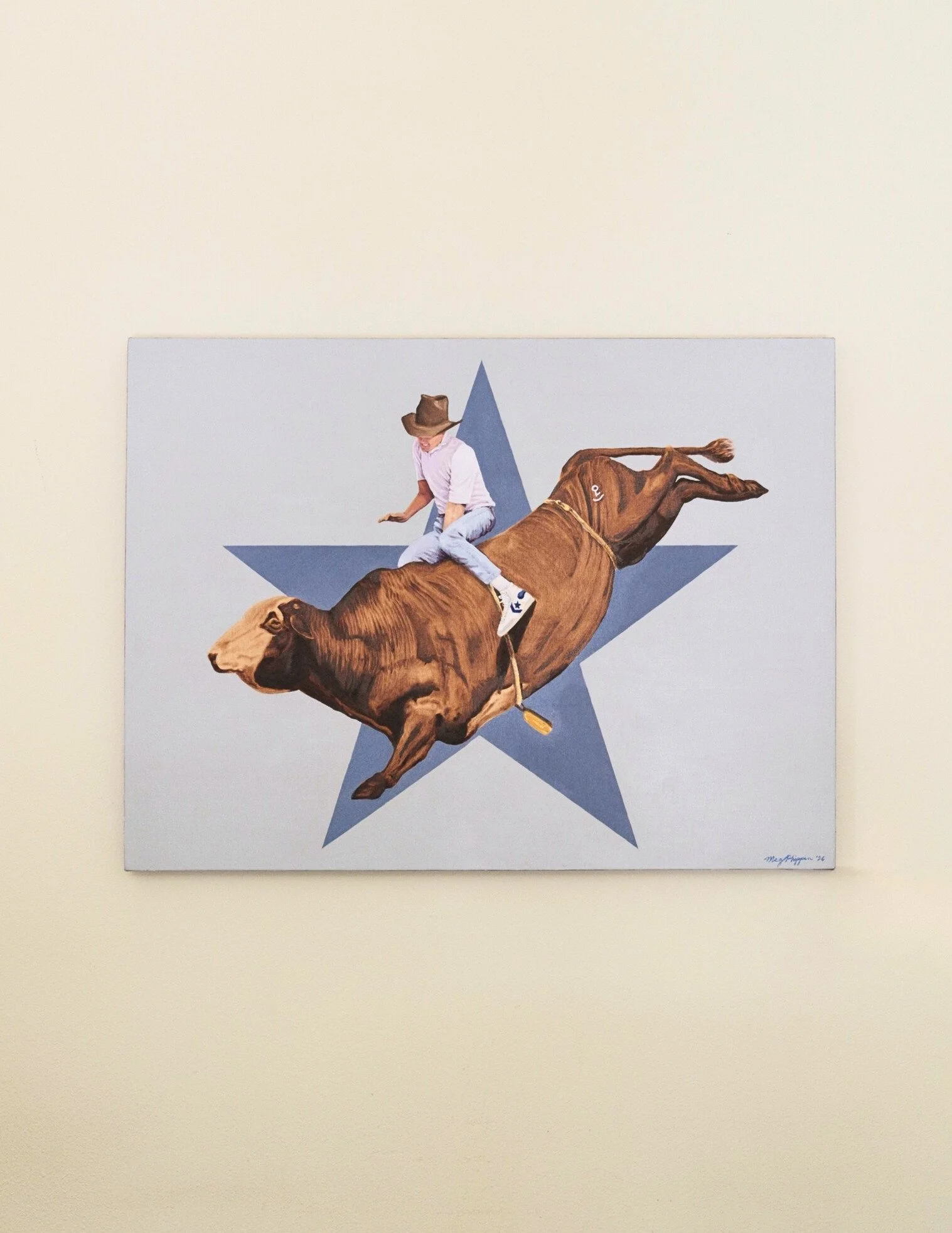
The idea for Converse Cowboy began while I was spending Christmas in Montana with my sister. A few months earlier, she had helped sort through my late grandfather’s belongings and found an old photograph of my uncle riding a bull while wearing Converse Chucks. The moment I saw the image, I knew I wanted to paint it. I loved the apparent tensions embedded within it: old versus new, control versus chaos, power versus vulnerability.
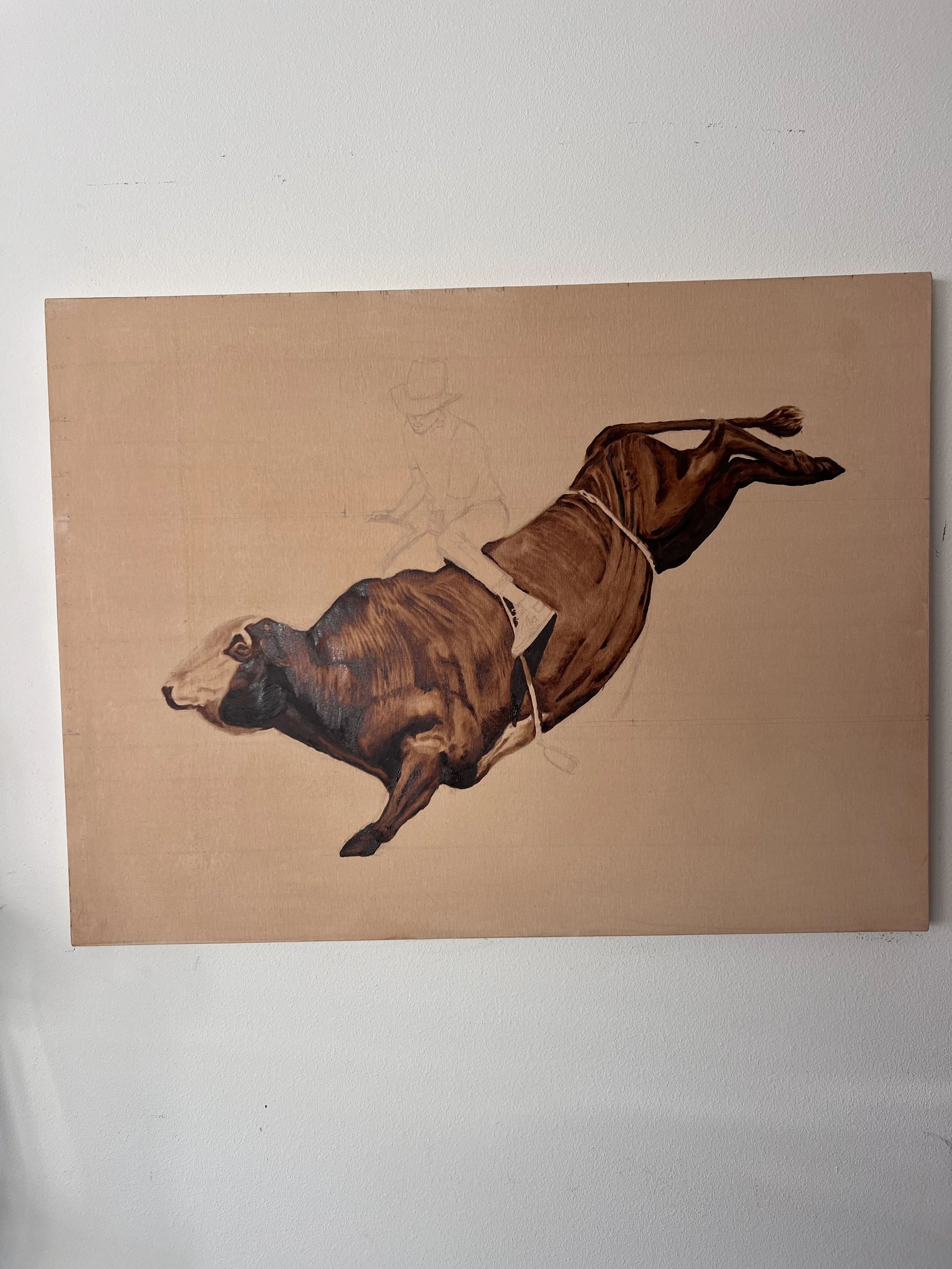
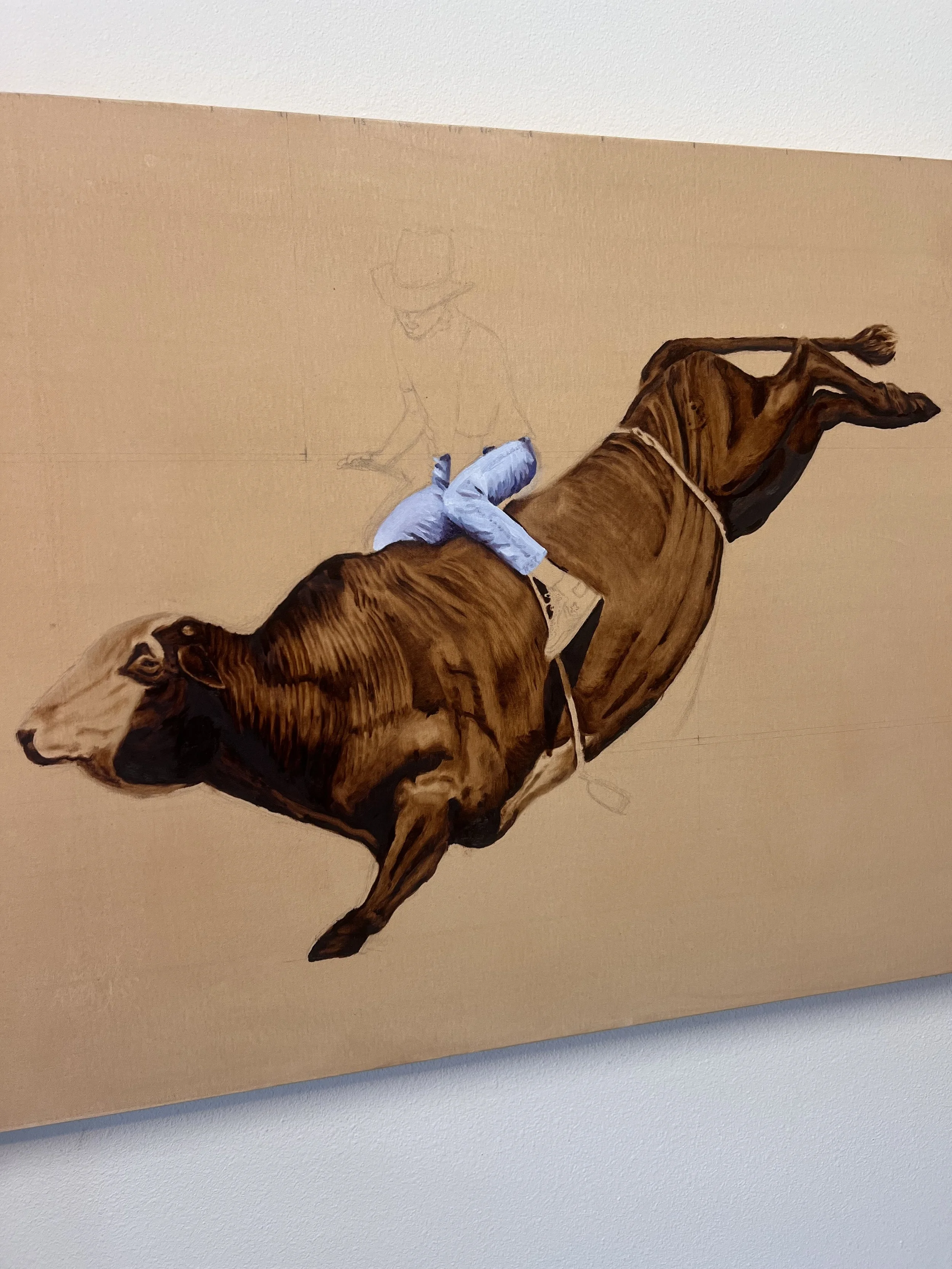
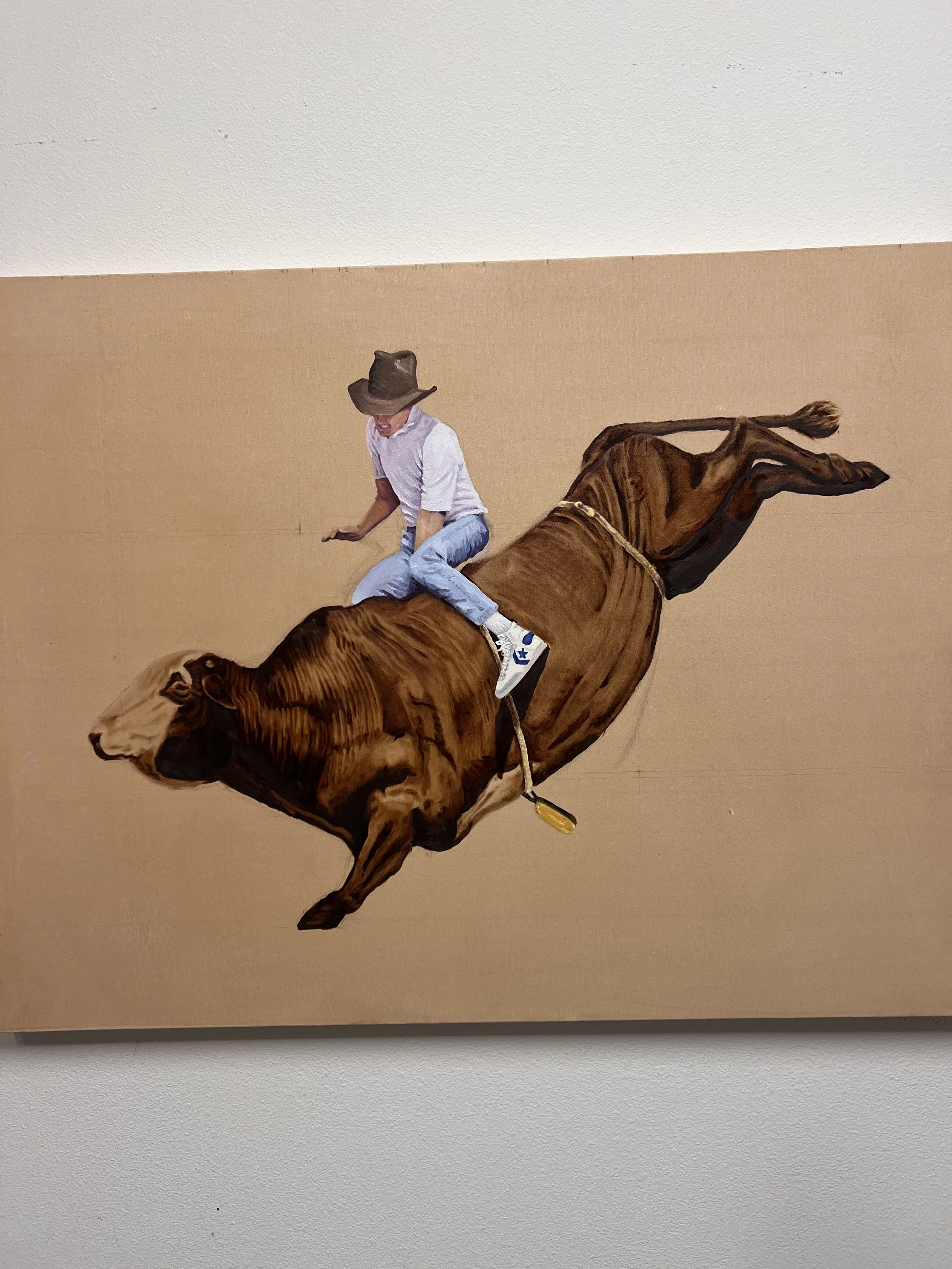
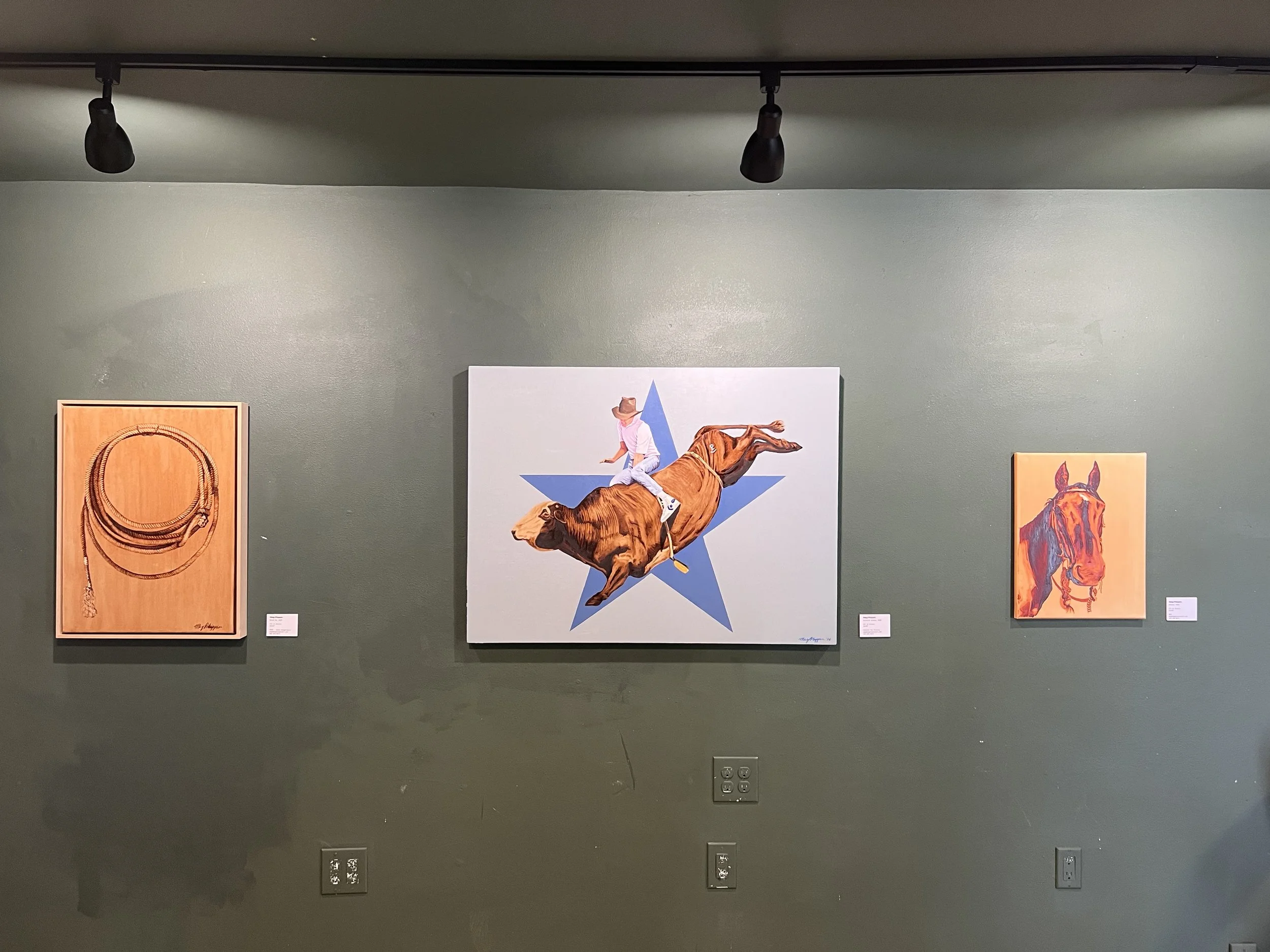
I chose a large canvas to match the scale and energy of the subject. The bull was painted in monochromatic values, paying homage to the original sepia-toned photograph and its connection to old Americana. I wanted the animal to come across as calm and unconcerned while still emanating power, almost indifferent to the rider on its back.
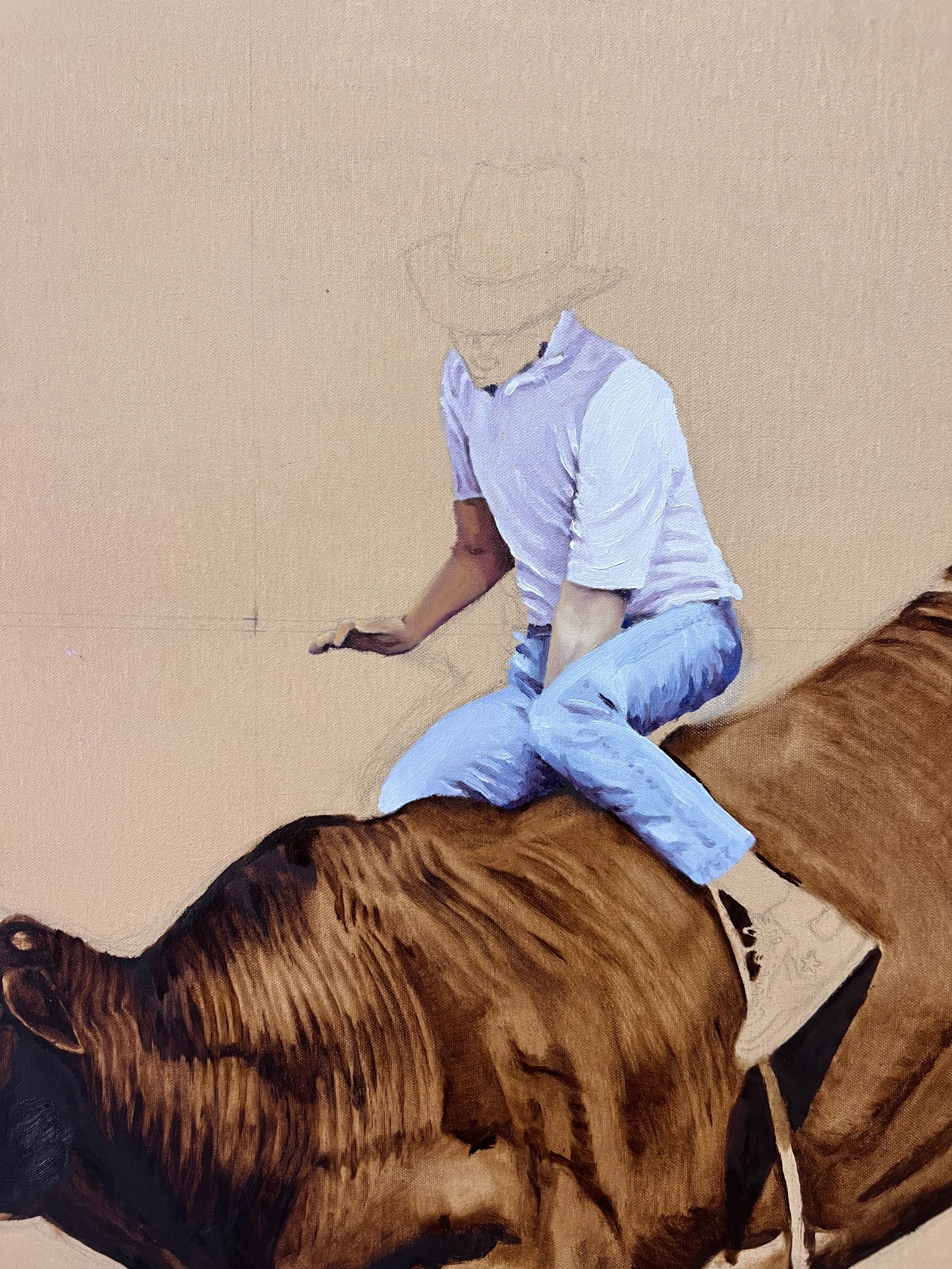
The cowboy presented a different challenge. With no color information in the reference photo, I was free to invent the palette entirely, including the light pink polo shirt. Much of the work went into refining the rider’s expression, which became one of the most important elements of the piece, as the grimace is central to the emotion of the piece.
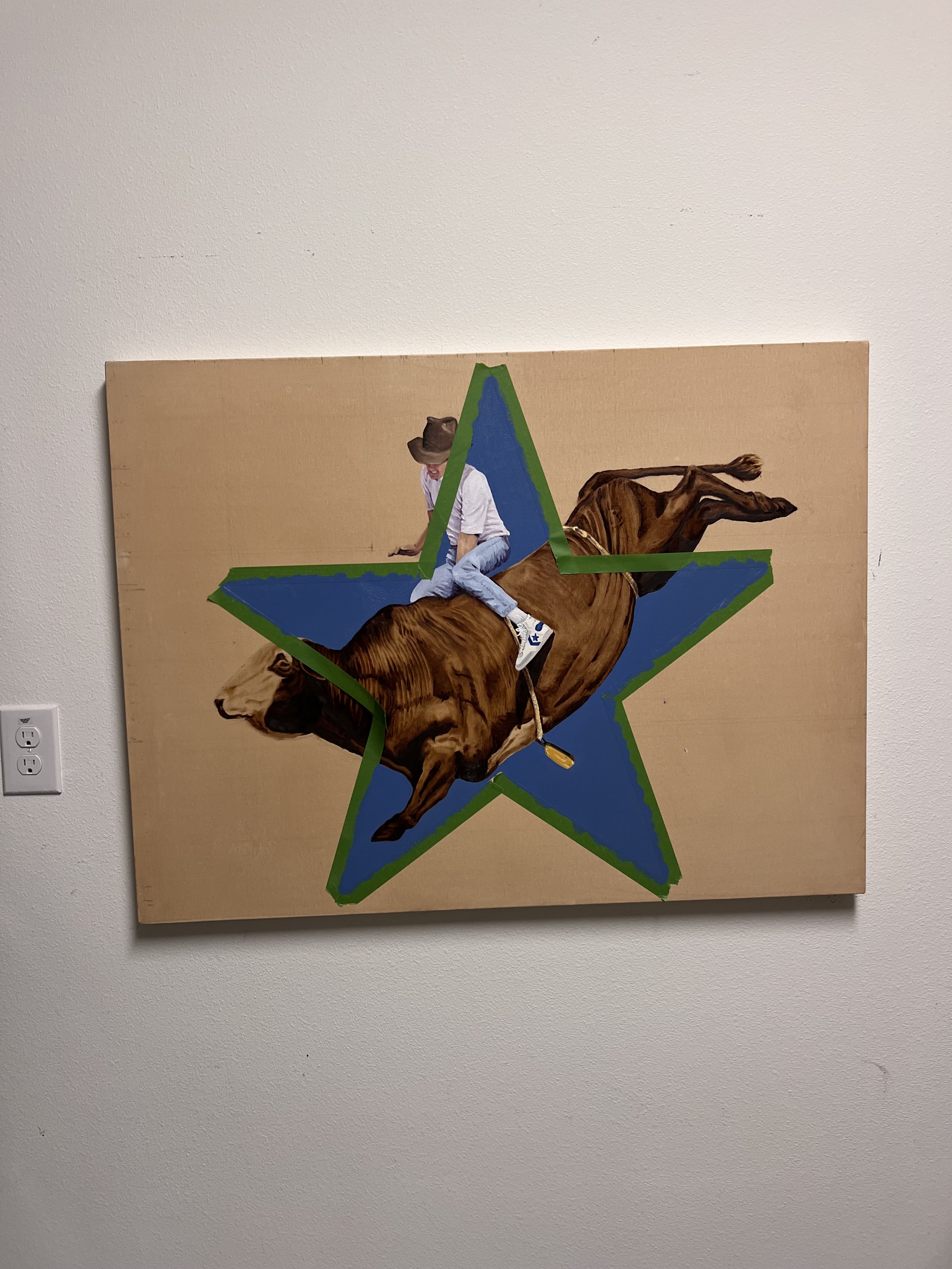
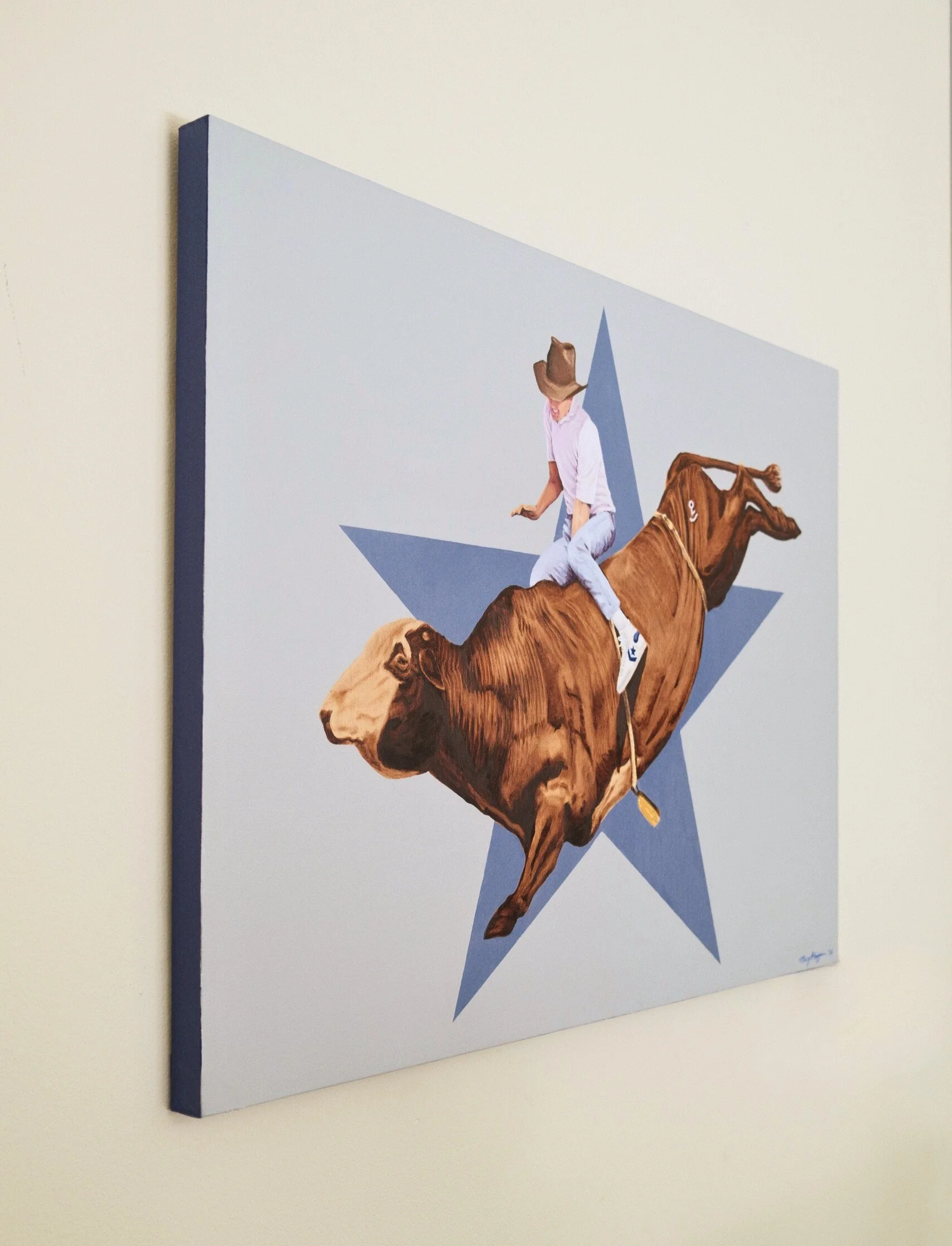
I thought up many different options for the background before I settled on a large star. This star is a symbol that references both the Converse brand and the state of Texas. Lets just say that math is NOT my strong suit, and an entire roll of tape may have been harmed in the making of the star, but after a short YouTube video the star was born. The muted blue palette was chosen to allow the warm tones of the bull and rider to stand forward, while the cobalt-painted edges of the canvas subtly echo the iconic Converse sneaker.
As a final detail, I added a brand to the bull that intentionally echoes the Venus symbol.
While Converse Cowboy draws from the mythology of the American West, it is not intended as a straightforward celebration of it. In recent years, Western imagery has experienced a cultural resurgence across fashion, music, and advertising. This painting asks why.
As a woman and a queer person who grew up loving horses, I am drawn to the independence, grit, and idealism often associated with the cowboy archetype. At the same time, I am aware of the histories that exist beneath that mythology: conquest, displacement, and the belief that land and power could be claimed through entitlement. The legacy of Manifest Destiny and its impact on Native peoples cannot be separated from the story of the American West.
The rider in Converse Cowboy exists somewhere between history and performance. Wearing modern clothing while participating in an iconic Western rodeo event, our rider becomes a symbol of the contemporary cowboy—a figure shaped as much by nostalgia, branding, and popular culture as by history itself. Rather than offering answers, the painting invites viewers to consider what exactly we are romanticizing when we romanticize the West, and what parts of that story have been left out.
For me, the this painting lives in the tension between admiration and critique.